
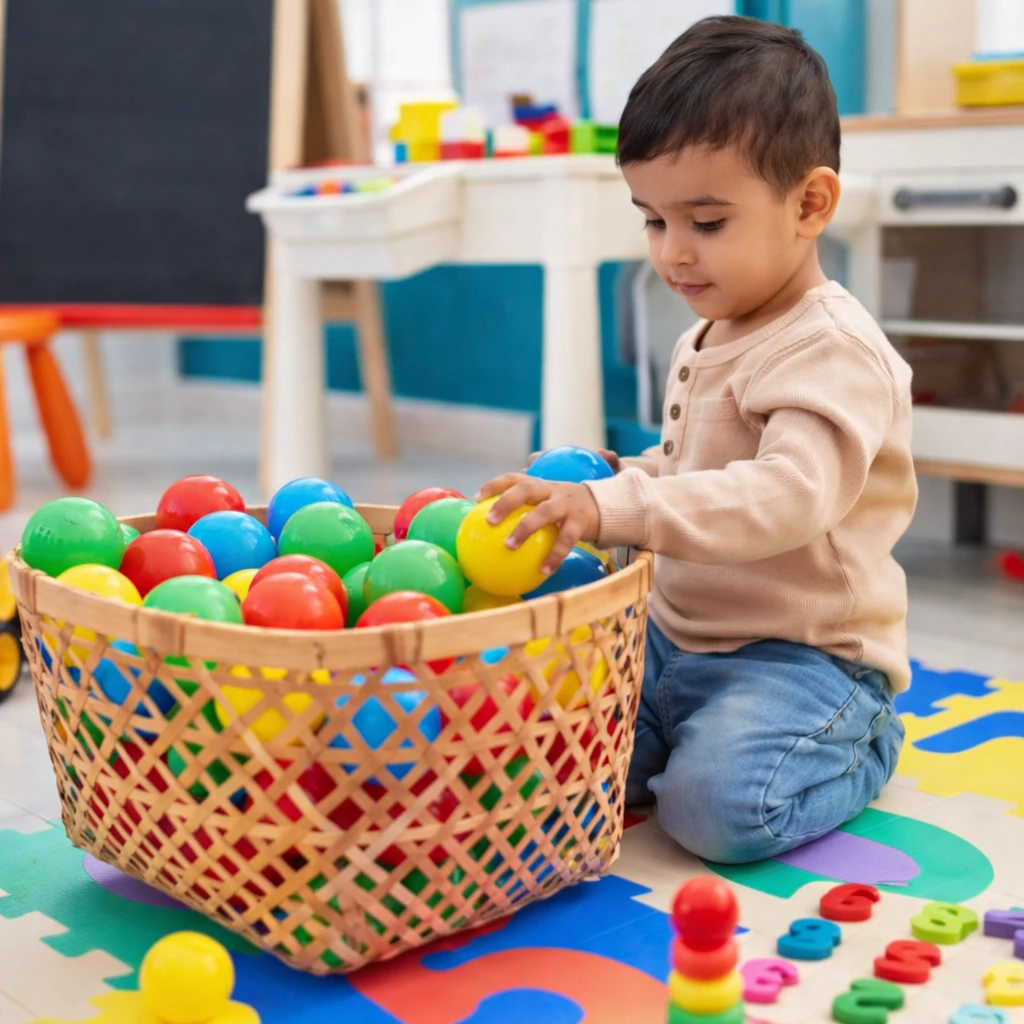
In the heart of every nursery in hertford lies a powerful tool that shapes children’s development in ways we’re only just beginning to fully understand, free play. Unlike structured activities, free play allows children to develop important social skills, explore their imagination, and develop essential life skills. The importance of free play is increasingly recognised in the fields of early childhood education and childcare, as it supports holistic development and fosters a lifelong love for learning.
This article explains how free play supports growth in multiple areas, cognitive, physical, social, and emotional. We’ll also explore how learn through play methods in nurseries and homes build confident, resilient, and curious learners.
What Is Free Play in Nursery Settings?
Free play is a form of unstructured, child-led activity that has no external goals or fixed outcomes. Unlike structured activities which are often directed by adults, free play is self-initiated and driven by the interests of the child. Whether in a world through play. preschool, nursery, or at home, free play encourages independence and experimentation.
In the early years, free play allows children to express themselves creatively, build confidence, and follow their curiosity. They might choose to build a tower, engage in pretend play, or explore sensory play. What’s important is that there’s no right or wrong way, the child leads, learns, and grows through exploration.
How Does Free Play Differ from Structured Activities?
Structured activities are adult-led with specific learning goals, like tracing letters or following step-by-step crafts. These activities do support some aspects of learning and development, but they lack the open-ended exploration that free play provides.
Free play has no external goals, which makes it uniquely valuable. It gives children the freedom to experiment, make mistakes, and learn through natural discovery. This contrast is what makes play-based learning help children build important skills while they engage in free play. so effective, it integrates play and learning in a meaningful way that aligns with how young minds develop.
How Does Free Play Foster Cognitive Development?
Cognitive development is all about how a child learns to think, solve problems, and make decisions. Free play fosters these skills by allowing children to follow their interests and engage in activities that stretch their thinking.
As children navigate their chosen play activities, building a structure, sorting objects, inventing a game, they engage in trial and error, hypothesis testing, and problem-solving helps children build important skills for their future.. These are all foundational skills for later academic success. In this way, play supports the brain’s natural way of learning by linking curiosity with cognition.
What Social and Emotional Benefits Does Free Play Offer?
Free play is not just about thinking skills; it’s also central to social and emotional growth fostered through the magic of learning and play. When children play with other children, they learn how to take turns, negotiate, share, and understand others’ feelings. It’s a powerful form of emotional learning.
Additionally, free play encourages self-regulation. Children experience disappointment when a tower falls or frustration when a friend doesn’t share, and they learn to cope with those feelings. This builds important skills for children as they engage in free play. emotional resilience, a crucial skill for managing challenges throughout life.
How Can Parents Encourage Free Play at Home?
Parents play a vital role in nurturing free play outside of school settings. To encourage free play at home, parents can offer open-ended toys like blocks, dress-up clothes, or simple art supplies. Creating a safe and inviting play space allows for imaginative exploration.
Most importantly, allow your child the freedom to choose what and how to play. Avoid interrupting or steering their play unless necessary. Remember, every child is unique, and they will show you what they need through how they engage in free play.
What Are the Key Barriers to Free Play in Nurseries?
Despite its proven benefits, free play can be overlooked in favour of more academic approaches in some early years settings. Over-reliance on learning activities that are overly structured can limit opportunities for free exploration.
Other barriers include limited time outdoors, tightly scheduled routines, or an overemphasis on preparing for school assessments, which can hinder early learning. Yet, play in early childhood has shown to be more effective at fostering lasting skills than premature formal instruction. This makes it vital for nurseries and preschools to prioritise play.
Why Free Play Encourages Language, Motor, and Problem-Solving Skills
Free play supports a wide range of areas of learning, from communication to physical ability. For example, role play helps develop vocabulary, storytelling, and conversational skills, all key aspects of early literacy and language development.
At the same time, stacking blocks, climbing, or painting support motor skills, both gross and fine. These physical movements are essential for hand–eye coordination and self-care tasks. And when a child learns to figure out how to solve a puzzle or fix a mistake, they’re building powerful social skills. problem-solving abilities.
What Role Does Outdoor Learning Play in Free Play?
Outdoor play is a cornerstone of rich free play experiences. Natural settings offer a dynamic and sensory-rich environment where children can move freely, investigate nature, and test their physical limits.
Through outdoor learning, children get to explore textures, sounds, and spaces that indoor environments simply can’t replicate. Activities like digging in the mud, climbing logs, or running barefoot provide benefits for both mind and body. They also allow children to engage with risk, an important factor in developing resilience and judgement.
How Do Early Years Practitioners Support Free Play?
Early years practitioners play a vital role in creating and maintaining learning environments that support free play. This includes offering a wide variety of resources, rotating materials to sustain interest, and observing play to understand children’s developmental needs.
Instead of directing the play, adults act as facilitators, stepping in to support, extend, or scaffold when appropriate. The balance lies in knowing when to watch and when to engage. A skilled practitioner knows that free play gives space for children to flourish independently while still being supported.
Why Free Play Is a Right for Every Child
The importance of free play isn’t just a pedagogical belief, it’s a fundamental right. The Convention on the Rights of the Child recognises play as essential for children to develop their creativity and social skills. for health, development, and well-being. The right to play is enshrined in international law, underscoring how vital it is for every child.
In places like Hertfordshire, nurseries and schools are embracing play-based learning as a way to foster early learning. play-based learning models that put play at the centre of early childhood education. Whether in Hertford or elsewhere, our goal must be to ensure children develop their social skills through play. children have the chance to enjoy childhood, grow through play, and build the skills they’ll carry for life.
Key Takeaways
- Free play is child-led, unstructured, and has no predetermined outcome, this makes it ideal for natural development.
- It supports cognitive, social, emotional, and physical development in early learners.
- Free play allows children to make decisions, solve problems, and take risks in a safe, nurturing environment.
- It encourages language skills, motor skills, and emotional resilience.
- Outdoor play enhances free play by offering sensory-rich experiences.
- Free play is important for children to develop their creativity and social skills. for every child and should be protected as a right, not a luxury.
- Nursery settings, childcare providers, and parents must work together to offer children the magic of learning through play. encourage free play.
- The power of play lies in its ability to help children to explore, experience, and enjoy learning in meaningful ways.