
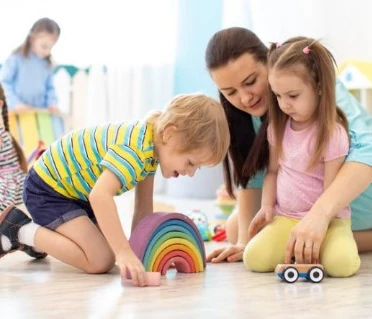
Play in early childhood holds a fundamental place in shaping young minds. Recognised globally and supported by the Convention on the Rights of the Child, the importance of play in early years is not only about fun, it's about laying the groundwork for lifelong learning and development. This article explores the power of play, its impact on childcare and early childhood development, and why we must prioritise play in every aspect of early years provision.
Why Is Play So Important in the Early Years?
During the early years of life, children experience rapid growth. The importance of play in this phase cannot be overstated. Play is the most natural and effective way for children to make sense of the world, build relationships, and experiment with ideas. It is central to childhood development and directly impacts emotional, social, and cognitive skills.
Experts in childcare and early childhood agree that play is essential in fostering curiosity, independence, and confidence. From a developmental perspective, play allows children to explore cause and effect, practise decision-making, and engage in early problem-solving.
What Role Does Play Have in Brain and Cognitive Development?
Play stimulates brain development. Play provides opportunities that support children's overall growth and learning. cognitive development by creating neural pathways through repeated, meaningful experiences. In early childhood, activities like block building, puzzles, and sorting objects offer children ways to test hypotheses and solve problems.
Learning through play promotes attention, memory, and logic. Children use play skills to plan, negotiate, and predict outcomes, all key aspects of cognitive growth. The power of play lies in how it makes learning enjoyable, which nurtures a love of learning that lasts beyond early education.
How Does Play Support Physical Development in Children?
From crawling and climbing to drawing and threading beads, play is critical for physical development in both large and fine muscle groups. Active play, such as running or dancing, supports strength and coordination, while creative tasks promote fine motor precision.
Whether through outdoor play or indoor play, these experiences support the development of balance, control, and spatial awareness. Children who engage regularly in physical play also tend to have improved health outcomes, which is vital for children to develop a strong foundation for growing a healthy lifestyle. healthy child.
Can Play Help Children Build Emotional Resilience?
Yes, one of the most overlooked benefits of play is its ability to foster emotional strength. Play enables children to express feelings in a safe space, and over time, this builds emotional resilience.
When challenges arise in play, such as a tower falling or a game not going as planned, children develop emotional coping skills. They learn to try again, reframe failure, and persist, all of which are essential for resilience. Play also helps children develop empathy and self-regulation, key components of emotional wellbeing.
What Are the Social Benefits of Play in Early Childhood?
Through play, children learn vital social skills like cooperation, negotiation, and turn-taking. These skills are essential in all future relationships, from family to school to workplace environments.
Play supports the development of empathy, conflict resolution, and group problem-solving. Children who regularly engage in play with peers become better communicators and collaborators. The role of play in fostering these competencies is foundational to early childhood education.
Why Pretend Play and Free Play Matter in Nursery Settings
In nursery and preschool Safe and stimulating environments encourage children to play and thrive. pretend play and free play is essential as children can explore their creativity and imagination. offer children the chance to be creators of their own stories and experiences. From playing "shop" to pretending to be animals, these forms of play are rich in imagination and learning.
Pretend play allows children to explore roles, rules, and emotions, while free play gives them autonomy to follow their curiosity. This type of child-led play promotes independence and problem-solving, both of which help children develop internal motivation and creativity.
How Does Play Enhance Language and Communication?
Children use spoken words, gestures, and even silence during play. These interactions enhance both language skills and language development. As they describe actions, ask questions, and negotiate rules, children learn to express complex ideas.
Through storytelling, singing, and conversation during play, children become more confident communicators. It's especially during early childhood development that play fosters essential social skills. play experiences that children develop vocabulary, rhythm, and comprehension, essential foundations for literacy and future learning.
What Is the Role of Outdoor and Indoor Play in Early Learning?
Both outdoor play and indoor play are vital. While outdoor environments offer opportunities for risk-taking, physical activity, and sensory exploration, indoor settings can support focused, creative, and structured play opportunities.
Whether indoors or outdoors, the key is to ensure children can play freely, safely, and often. The power of play is maximised when environments are varied and inviting, supporting children's right to play and allowing children to thrive in diverse settings.
Is Play a Right or a Luxury in Early Years Education?
The right to play is enshrined in Article 31 of the Convention on the Rights of the Child, highlighting that play is often misunderstood as optional or frivolous, yet it plays a crucial role in children's learning. In reality, play is a crucial role in every child's development and cannot be overlooked.
Children need consistent opportunities to play to ensure holistic development. Ensuring children have access to quality play is just as important as any academic learning goal in the early years.
How Can Childcare Providers Encourage Quality Play Experiences?
Professionals in childcare must support play by providing time, space, and resources for meaningful engagement. This includes scheduling unhurried play opportunities, offering a variety of materials, and observing play to understand each child's interests and needs.
By recognising the benefits of play, practitioners can design rich environments that enable children to explore, question, and create. In places like nurseries Hertford, play is vital for learning and development in young children, and throughout their early experiences. Hertfordshire, many providers believe that play is the cornerstone of best practice, aligning with policies that honour the rights of the child Play promotes inclusive, developmentally appropriate education, encouraging children to grow in a supportive environment.
Key Takeaways
- Play in early childhood supports cognitive development, physical skills, and emotional resilience.
- The importance of play is supported by international law and is a core aspect of the rights of the child.
- Play offers children opportunities to explore, express, and understand the world around them.
- Pretend play, free play, and child-led play are essential for imagination and problem-solving.
- Play supports language development, social skills, and the formation of strong emotional bonds.
- Both indoor and outdoor play contributes to a holistic approach to development in the-young children. early childhood development.
- Quality childcare must prioritise play as central to effective early years provision.