
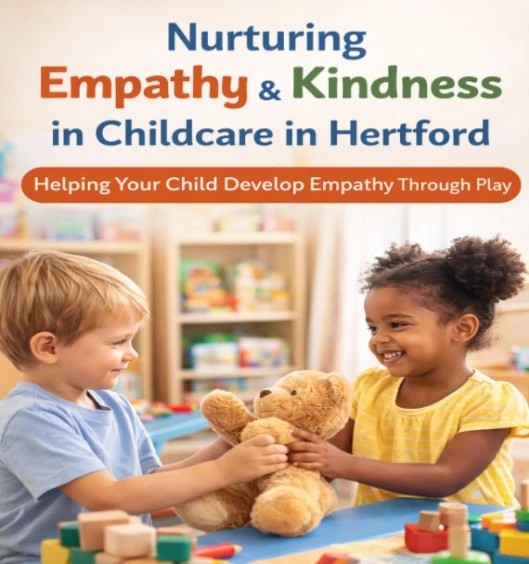
Empathy and kindness are more than just values; they are skills that children can learn and develop from a young age. In the early years of childcare, especially in nurturing environments like those in Hertford, these traits become building blocks for healthy social-emotional skills that are crucial for younger children.
In this article, we explore practical ideas to help nurture these qualities and show how childcare settings can support your goal to help your child become more understanding, considerate, and compassionate actions help kids learn about empathy.
Why Are Empathy and Kindness Essential in Early Childhood?
Young children develop essential skills during early childhood.. Building character is just as important as learning letters and numbers. Teaching empathy and kindness lays a strong foundation for future relationships, emotional regulation, and success in social situations.
Research shows that children who develop empathy early are more likely to build stronger friendships, perform better in school, and become more emotionally intelligent adults.
How Can Childcare Settings in Hertford Support Emotional Growth?
Quality childcare in Hertford creates opportunities for emotional learning through daily interactions. Skilled caregivers model behaviour, use open communication, and support children in naming and understanding their feelings.
When children feel safe and supported, they are more open to showing empathy and learning about their emotions. emotions of others.This emotional growth is strongest when children have secure, consistent relationships with familiar caregivers, forming a safe base from which empathy and kindness can develop.
What Does Empathy Look Like in Young Children?
Empathy in children may look like offering a toy to a crying friend or noticing when someone is sad and asking, "Are you okay?" These small moments reflect their growing ability to sense another person's feelings and respond with care.
It's important to remember that empathy isn't automatic. Instead, it grows with practice, patience, and exposure to caring role models.
How Do You Teach Children to Practise Kindness?
To teach children kindness, introduce small acts of kindness daily. Whether it's helping set the table, sharing crayons, or writing thank-you cards, these simple acts foster a culture of care and mutual respect.
Children learn best through example, so it's key to practise kindness yourself and reinforce it with open-ended questions like, "How do you think that made her feel?"
Why Is "Modeling Empathy" Important?
Modeling empathy involves showing your own feelings and reflecting on others'. When a caregiver openly expresses concern for a friend or explains their own emotions, it normalises emotional expression and encourages children to do the same.
Ask questions like, "What do you think he felt when he dropped his toy?" or "What can we do to help them feel better?" These scenarios help children think beyond themselves.
How Does Play Help Develop Empathy?
Empathy through play is a powerful way to develop empathy. Games that involve cooperation help kids in building empathy skills. pretend play, and expressing emotions let little ones experience others' perspectives.
In emotional activities, children might act out being a doctor, carer, or friend, learning to understand a child's feelings or how to make him feel better. It's a playful way for children to express their emotions and to build compassion while having fun.
What Are Practical Ways to Build Empathy in Children?
Here are some hands-on ideas to help:
- Use care packages to show concern for others.
- Practice listening games to tune into body language.
- Rehearse emotional scenarios and ask, "What would you do?"
These actions help kids understand and express their feelings better. to build empathy, encourage children to consider others' feelings. and teach children that even small actions can make others feel good by showing empathy and understanding..
How Do Books and Stories Support Empathy?
Read books that feature characters in emotional or ethical dilemmas. Talk with your child about what the character is feeling and what could help them feel better.
This storytelling approach helps children understand different viewpoints, strengthening empathy and kindness while improving language and critical thinking.
How to Use Role-Playing and Pretend Play to Foster Understanding
Role-playing can be a playful method for children to explain empathy. allows children to step into another's shoes. Whether it's playing parent, teacher, or even pet, these games encourage empathetic thinking.
Let your child create open-ended stories or act out familiar scenarios. It helps them process real-world experiences and builds meaningful connections with others to help kids develop social-emotional skills.
What Can Parents and Caregivers Do at Home?
At home, there are many ways to nurture kindness and empathy:
- Let your child express feelings without judgement.
- Use consistent reinforcement for kind behaviour.
- Encourage questions like, "What could you do to help?"
Above all, remember that empathy doesn't grow overnight. It's a skill that requires daily practice, reflection, and encouragement from caring adults.
Key Takeaways
- Empathy and kindness are essential traits for early childhood development.
- Nurturing environments like Mini Morgan's childcare in Hertford can support this emotional growth.
- Help your child by modelling behaviour, using stories, and encouraging play-based learning.
- Use tools like role-playing, reading, and real-life scenarios to build awareness and understanding, give your child opportunities to express their feelings.
- Children grow emotionally when adults are intentional, patient, and compassionate.