
Supporting Early Years Nursery Children with Emotional Regulation and Self-Regulation Skills
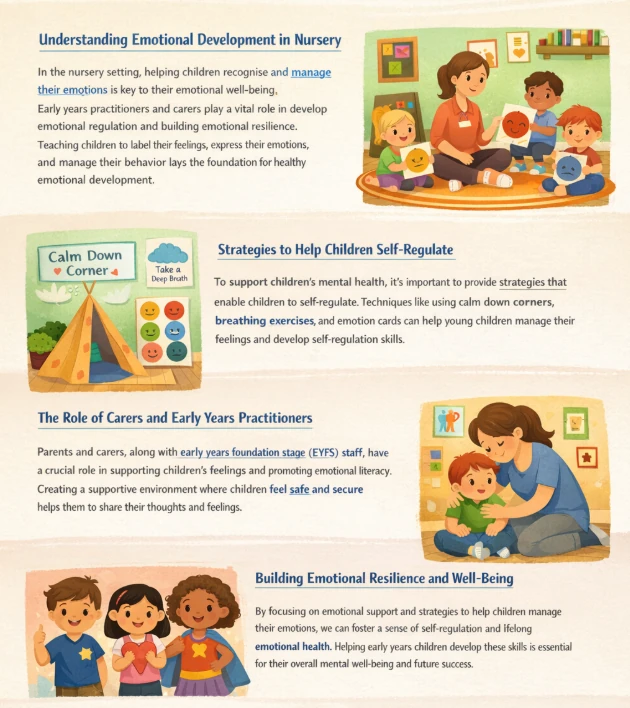
Supporting emotional regulation and self-regulation in the early years is crucial for children's overall emotional development, mental health, and long-term success. In this blog post, we explore why it's essential for nursery settings to foster these skills and offer practical, research-backed strategies to support young children in recognising, expressing, and managing their emotions.
Whether you're an early years practitioner, teacher, carer, or parent, this article provides valuable insight into nurturing a child's ability to manage emotions. These skills are foundational for building emotional resilience, cognitive development, and lifelong emotional health.
What is Emotional Regulation in the Early Years?
Emotional regulation refers to a child's ability to manage their emotions in response to their environment. In early childhood, this skill helps children understand a range of emotions, from joy and excitement to frustration and anger. In a nursery setting, helping children recognise and respond to emotions appropriately lays the groundwork for healthy emotional and social development.
By focusing on emotional regulation, early years professionals can help children manage their behaviour and reactions in various settings. This is not about controlling emotions but enabling children to regulate their responses.
Why Does Self-Regulation Matter for Nursery-Aged Children?
Self-regulation is the ability to control impulses, focus attention, and manage emotional reactions. In the early years, it supports cognitive development and is essential for school readiness. Children need strong self-regulation to participate successfully in group settings, make friends, and engage with learning.
Supporting self-regulation and executive function from a young age helps children develop the skills they need to navigate challenges and build confidence and self-esteem in the early years. These are key to helping children manage their emotions, build confidence, and develop emotional regulation skills that will benefit them for life.
How Do Early Years Settings Promote Emotional Development?
Nurseries and early years settings are ideal environments for fostering emotional development. Through structured activities and daily routines, children are given opportunities to recognise, name, and respond to feelings.
Learning to express their emotions constructively allows children to understand both their own needs and those of others. These settings also allow children to engage in role-play and group activities, which naturally promote awareness of emotions and their expression.
What Role Do Practitioners and Carers Play?
Parents and carers, along with early years foundation stage (EYFS) staff, have a vital role in shaping how children handle emotions. Consistent and responsive guidance and support enable children to feel secure, build trust, and explore their feelings without fear of judgment.
An early years practitioner can help children recognise emotions by modelling calm behaviour, narrating feelings, and using simple strategies like emotional zones or charts. Carers and educators create an atmosphere where children feel safe, valued, and understood, which is fundamental to emotional learning.
What are Effective Strategies to Help Children Self-Regulate?
To foster mental well-being, nurseries should implement structured strategies to help children self-regulate. Some useful methods include:
- Emotion cards to help children label their feelings
- Creating a calm-down corner
- Using breathing exercises
- Practising mindfulness and yoga
- Storytime focused on emotional themes
These approaches to support children's self-regulation help reduce anxiety, support emotional well-being, and teach practical tools for managing emotions.
How Can Children Learn to Recognise and Label Their Feelings?
Before children can regulate their emotions, they need to recognise what they're feeling. Developing emotional literacy means teaching children to share their thoughts and feelings, which contributes to a stronger sense of self.
Tools like mirrors, puppets, and feeling wheels can be used to teach vocabulary for expressing emotions. This not only helps children feel understood but also improves communication and language, empowering them to ask for help and resolve conflicts.
What is the Link Between Emotional Literacy and Behaviour?
There is a strong connection between emotional literacy and positive behaviour. Children who can identify and talk about their emotions are more likely to use appropriate ways to deal with them. On the other hand, children who struggle to articulate emotions may express them through aggression or withdrawal.
Supporting children in expressing their emotions helps reduce challenging behaviour and enhances empathy. Over time, children begin to manage their feelings constructively, leading to better relationships and cooperation in group settings.
How Do Relationships Between Children Support Regulation?
Relationships between children in the nursery are vital for building empathy and practising emotional expression. By playing and interacting with peers, children learn to negotiate, compromise, and respond to others' feelings. These experiences help children manage their emotions in real time.
Structured group activities and free play offer natural environments where children feel safe to try out new social skills, receive feedback, and develop confidence.
What is the EYFS View on Emotional and Mental Well-Being?
The Early Years Foundation Stage Framework identifies personal, social, and emotional development as a prime area of learning. It emphasises the importance of emotional security, resilience, and self-confidence for future success.
According to EYFS guidance, supporting children's mental health from the start has a positive impact on learning, behaviour, and child development. Children who feel emotionally secure are more willing to explore, engage, and persist with challenging tasks.
How Can Hertford Childcare Providers Support Emotional Foundations?
High-quality childcare in Hertford, such as that offered at Mini Morgans, is well-placed to support young children's emotional needs. With trained staff and nurturing environments, they implement evidence-based methods to support emotional well-being and mental health.
Incorporating local values, community, and a supportive environments ensures that children feel secure, understood, and respected. These are the emotional foundations needed for future resilience and success.
Key Takeaways
- Self-regulation and emotional regulation are essential for early years development and should be nurtured from nursery age
- Children benefit from strategies like emotion cards, mindfulness, and calm-down corners
- Carers and early years practitioners play a vital role in modelling and supporting emotional skills
- Creating environments where children feel safe to express emotions encourages confidence and emotional security
- Hertfordshire childcare providers can make a meaningful impact by aligning practices with the EYFS and supporting children's development
- Prioritising emotional well-being in the early years lays the groundwork for lifelong emotional health